Talk with our engineers by joining the new Onehouse community Slack!
AI-READY DATA
Make your data AI-ready
Your lake already holds what your agents need. Onehouse makes it the AI data layer: documents ingested, vectors kept current, batch inference, context at database speed, one gateway for models and tools, every trace captured. Open formats, your account.
Everything you need to unleash AI in your organization
From vector embeddings, training pipelines and context serving to inference, on a single AI data platform.

Unstructured ingestion, vectors kept current
PDFs, docs, wikis and tickets land beside your tables, chunked and embedded incrementally, as open tables any engine reads.
Training data from your own records
Curate, validate and version training sets in PySpark, with lineage, and ship them to Baseten, Fireworks or Together AI.
Context at database speed
Lakegres serves lookups, scans, vector and text search on the same open tables, governed by row- and column-level access policies.
One gateway for models and tools
Route any model and centrally govern which agent can call which tool and reach which data, with every request attributed and costed, in your VPC.
Every agent trace, as a table
Traces land in open tables at TB to PB scale, mutable and time-travelable, with no per-GB toll.

Post-training on your traces
Outcomes and labels join onto traces, and the curated set feeds the next SFT, RL or eval run.
Ingest everything, keep vectors current
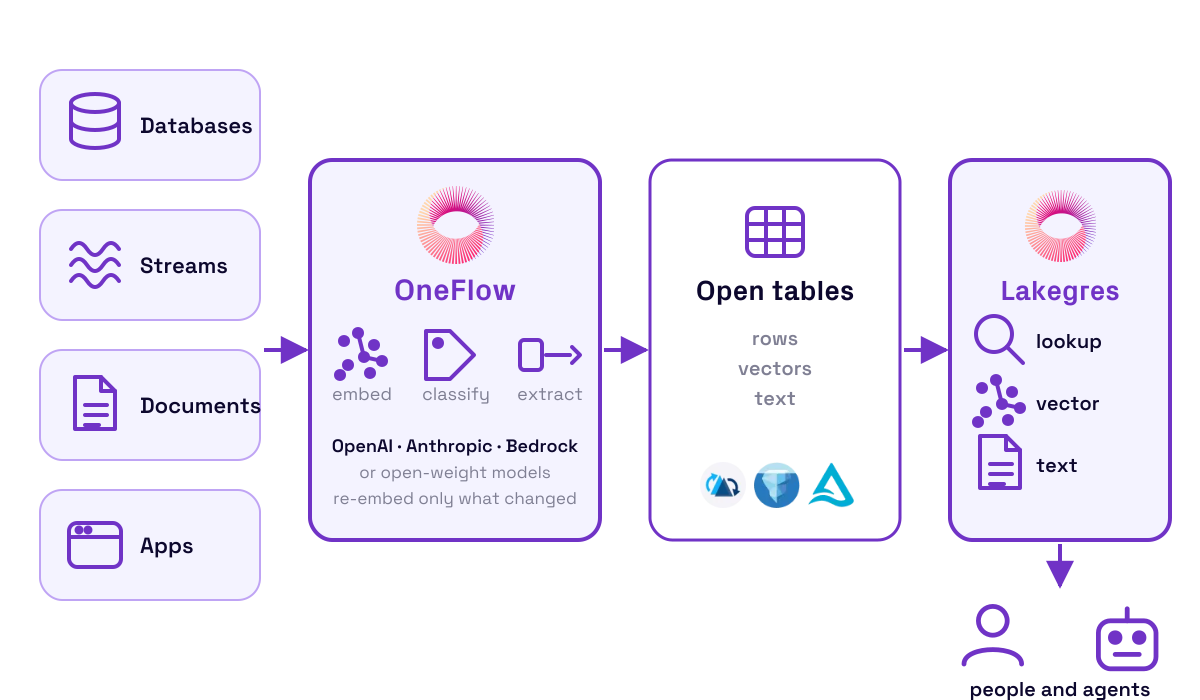
- Documents become tables. OneFlow lands databases and streams beside PDFs, wikis and tickets, one row per file, chunks and vectors as columns of the same table. One SQL query ranks by similarity and joins the facts.
- Incremental embeddings. A changed row or document re-embeds only its own vectors. No full runs, no stale index.
- Any model. OpenAI, Anthropic, Bedrock or open-weight models you host. Table optimization keeps vector tables compact.
Batch inference and training data, in PySpark
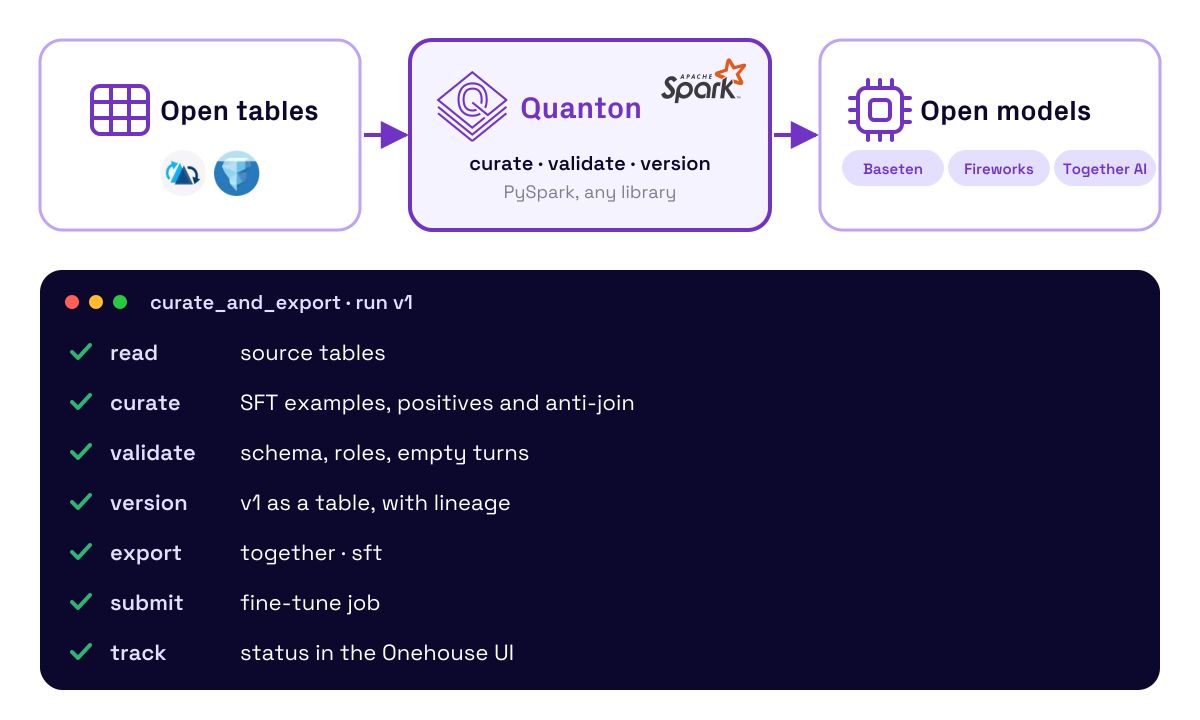
- Run models over the whole lake. Training, post-training and search start from documents parsed into tables you can filter, join and version. Quanton runs embedding, classification and extraction inline, at Apache Spark™ scale.
- Curate from your own records. Join traces to outcomes, filter by policy, version the set as a table with lineage.
- Open data, straight into open models. One sink validates, versions and ships the set to Baseten, Fireworks or Together AI, then tracks the run.
Context at database speeds, but directly from the lake
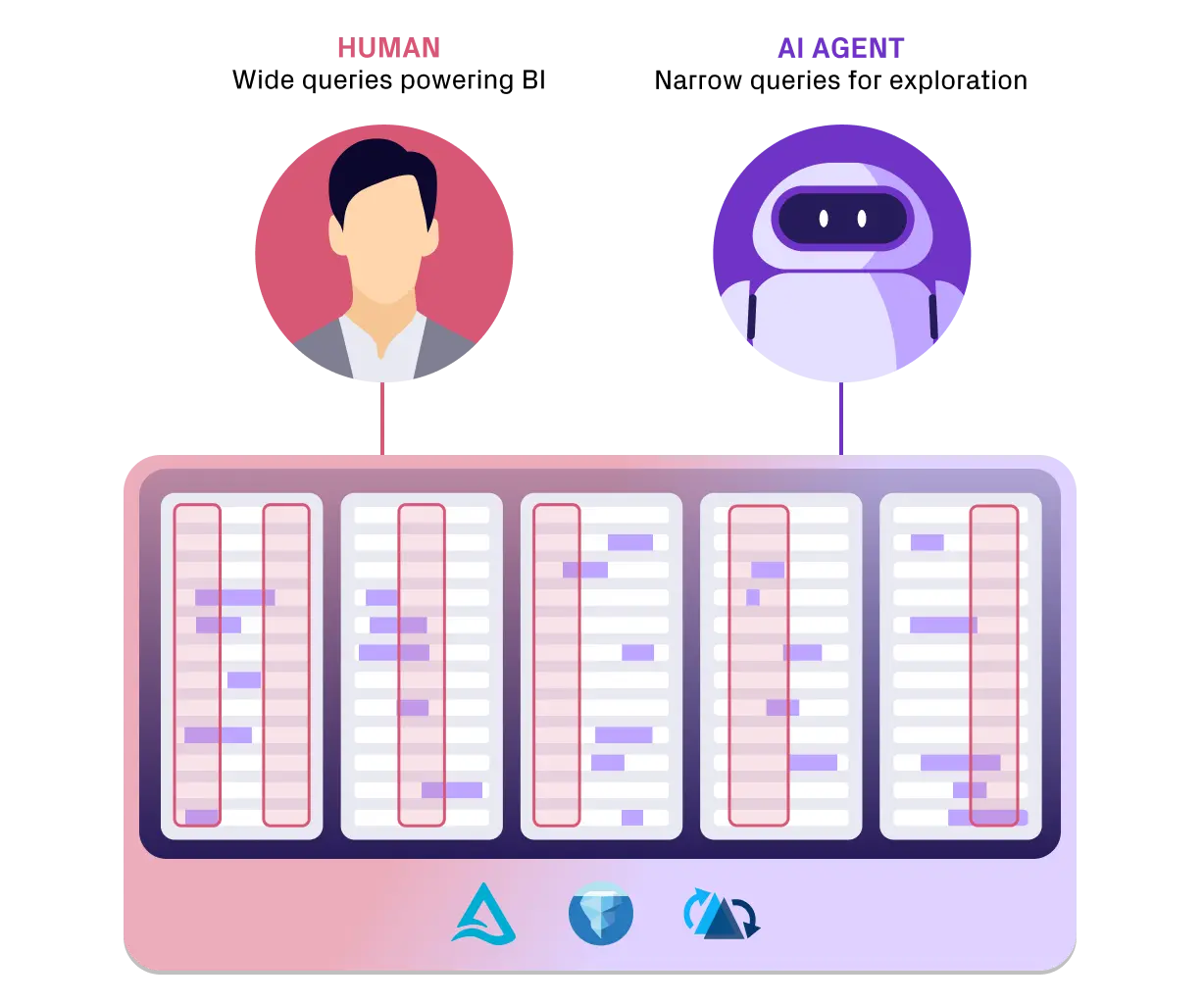
- One endpoint for every query shape. Lakegres answers lookups in milliseconds, scans in seconds, and vector and text search on the same open tables, over a Postgres wire-compatible endpoint. 95% lower latency on a 1 TB TPC-DS lookup benchmark.
- Built for agent concurrency. Hundreds of queries a second from reasoning loops, autoscaled under bursts, with no copy into a warehouse or vector database.
- Governed by default. One place to control which agent can reach which table, row and column, enforced on every query, and the same policies travel to Glue, Unity, Snowflake and OneLake through OneSync.
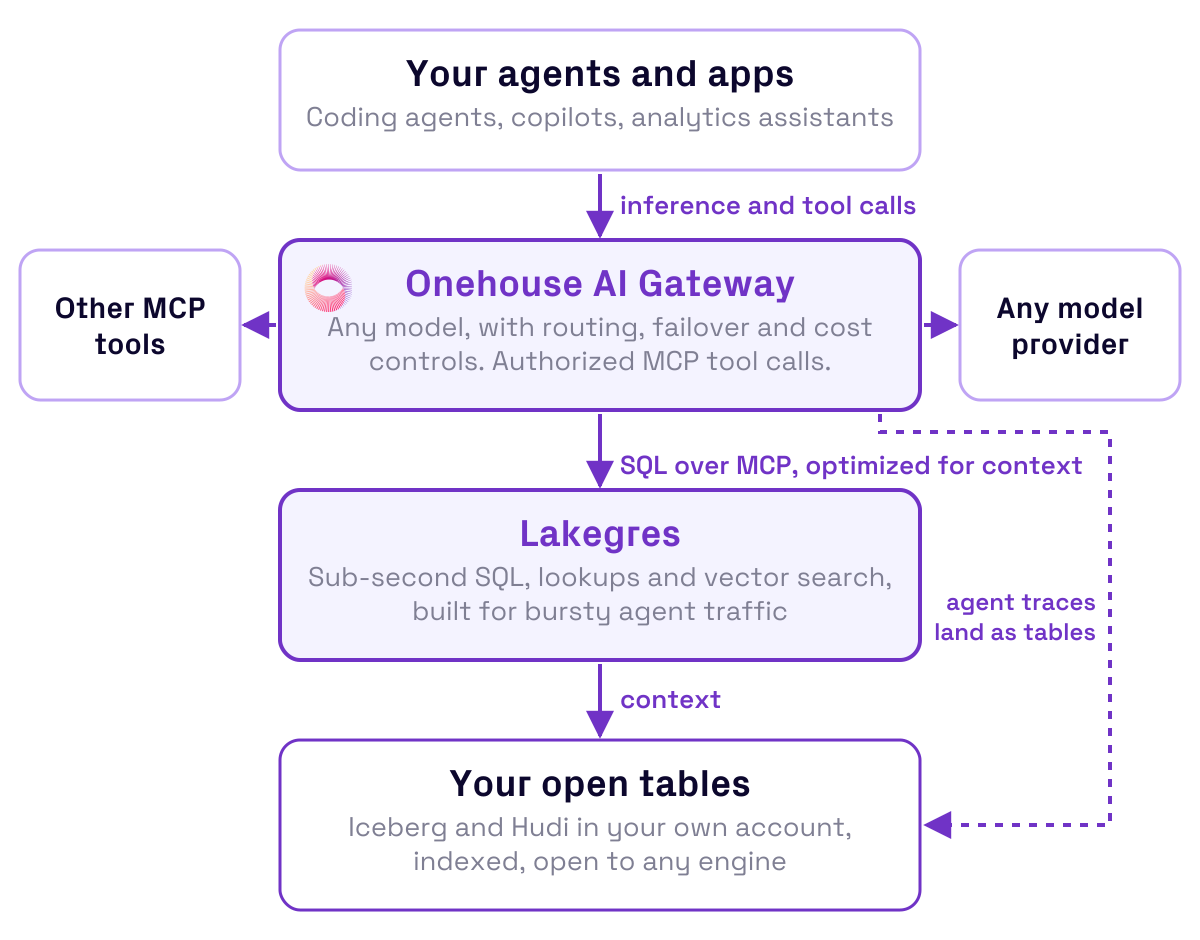
One gateway for models and tools
- Inference gateway. Route to OpenAI, Anthropic, Bedrock, Baseten or self-hosted vLLM with stable aliases, failover and your own keys. No per-token charge.
- MCP gateway. Lakegres is the built-in MCP server onto every table in your lake. Register databases, SaaS tools and warehouses beside it, and govern centrally which agent can call which tool and touch which data.
- Model governance and cost tracking. Who can call which model, with what budget, and what it cost, by caller and model.
Capture every agent trace, query it at scale
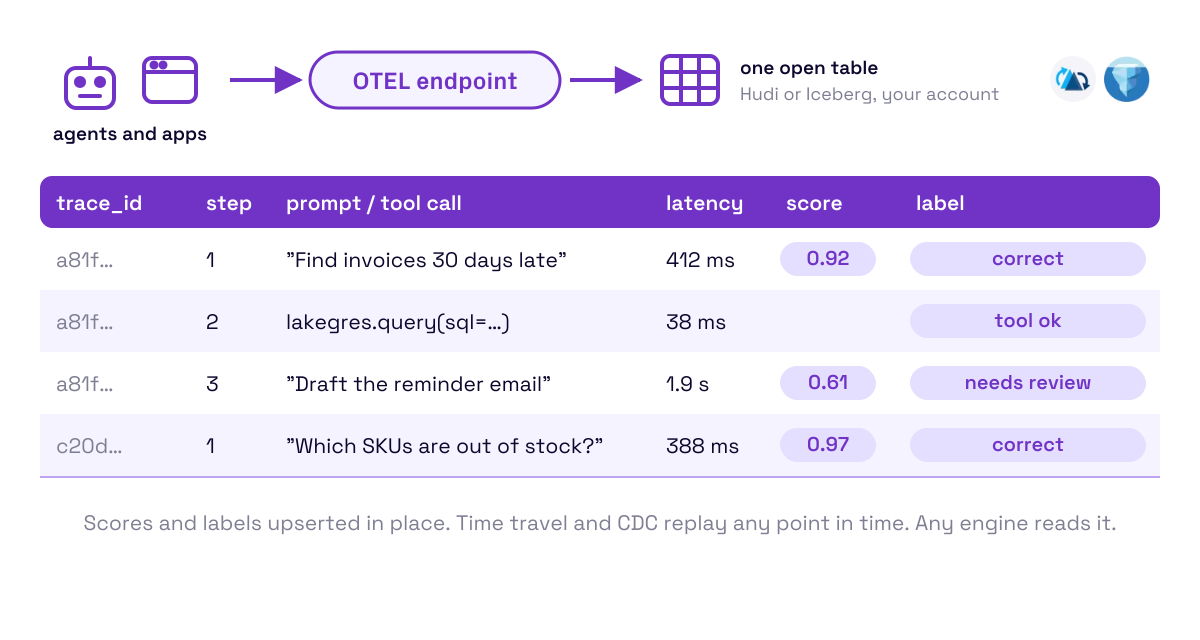
- Publish traces over the standard OTEL endpoint, consume as a table. Agents log from any process, OTEL or Langfuse straight into open tables in your account. No tracing SaaS holding your best training data hostage.
- Mutable, versioned, queryable. Traces get scored, labeled and revised after the fact. Time travel and CDC queries build evals and RL environments as of any point in time.
- Close the loop. The same traces feed the curation pipelines, so the next training run starts from what your agents did.
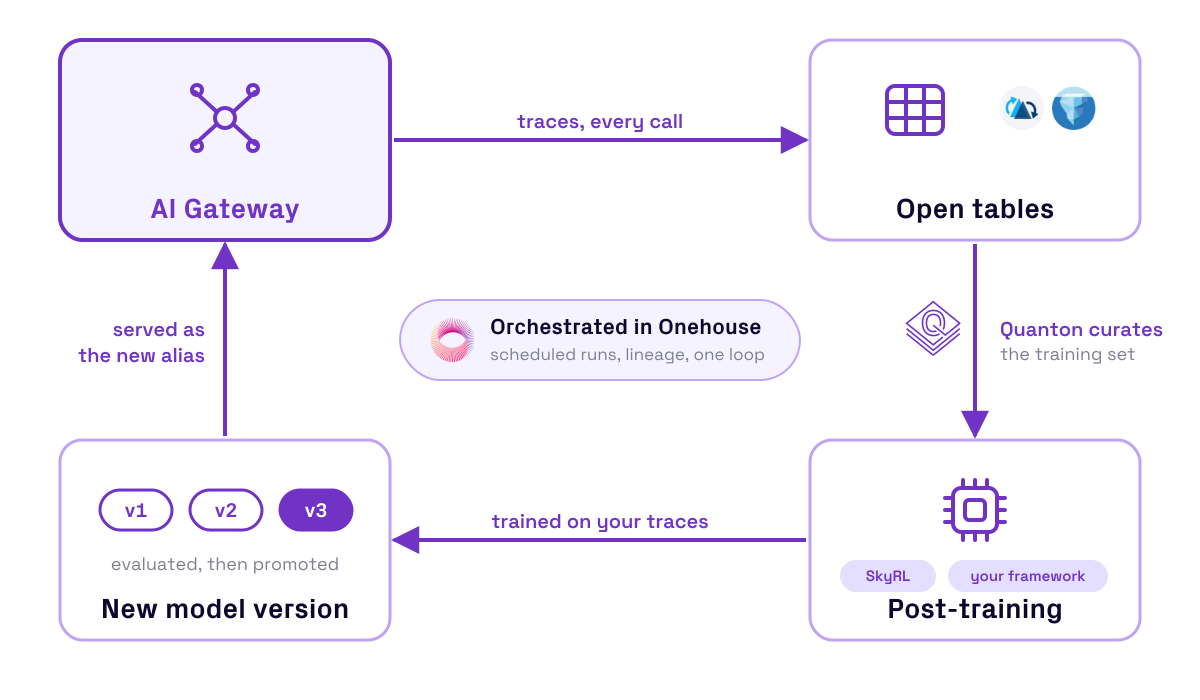
Post-train on what your agents actually did
- Collected at the gateway, at TB to PB scale. Every inference and tool call through the AI Gateway lands as rows in open tables in your account. No per-GB toll, nothing in a vendor's format.
- Feedback becomes the next training set. Outcomes, scores and expert labels join onto the traces after the fact. The curated set versions with lineage, ready for SFT, RL and evals, and ships to your provider.
- AI-native companies save big by post-training open models. Harvey post-trained Tenet, its legal model, on expert, public and synthetic data it assembled. Coinbase post-trained a 9B fraud agent on its own outcomes and beat a frontier model on every metric. Both start from data they own.
Any model. Any table. Anywhere.
The gateway, the serving layer and the traces run in your VPC, your datacenter or a neocloud, next to the inference you already pay for, with no per-token charge and nothing landing in a vendor's format.
READ: AI GATEWAY
Your lake is already the AI data layer. Turn it on.
Try it free