Talk with our engineers by joining the new Onehouse community Slack!
LIVE WEBINAR
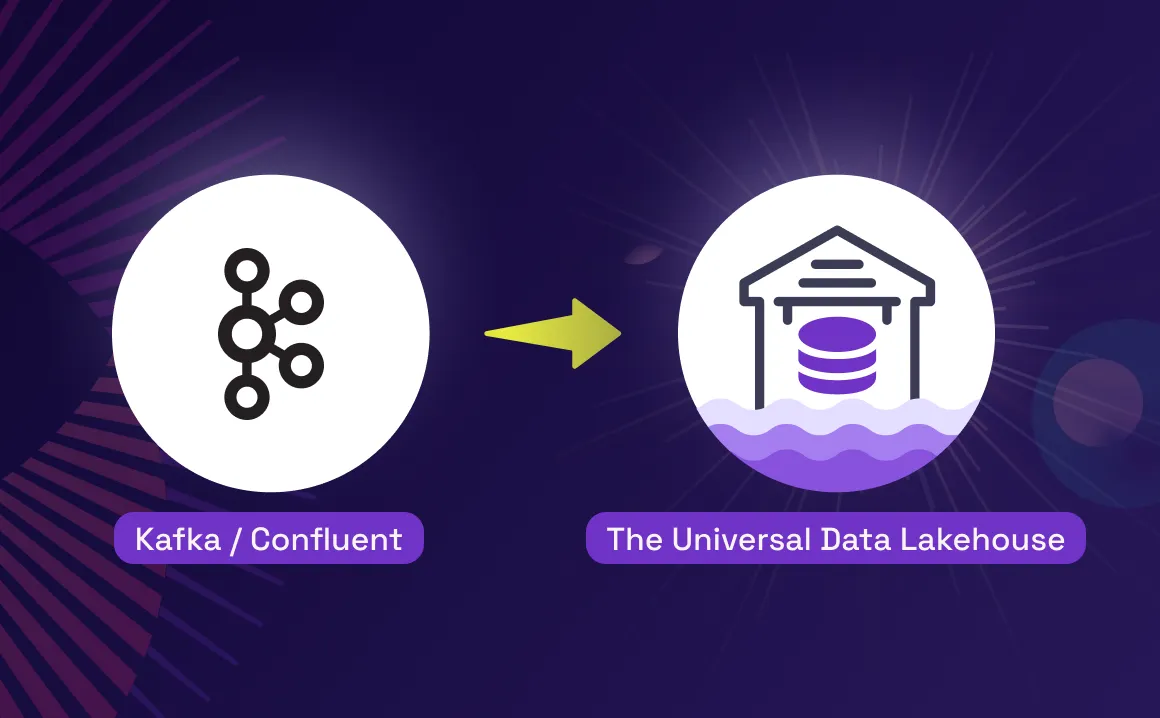
Streaming Ingest & CDC at Scale: Kafka to the Lakehouse
Scale data ingestion like the world’s most sophisticated data teams, without the engineering burden.

February 27th, 2024 | 10am PST
Register for this webinar to

Learn what a data lakehouse is and why you need one.

Discover how the lakehouse bridges the gap between data warehouses and data lakes.
See a live demo of the Onehouse Universal Data Lakehouse™ for popular use cases such as CDC.
About this Webinar:
The data lakehouse is attracting greater and greater adoption. But building your own data lakehouse is challenging. Onehouse's Universal Data Lakehouse™ is a fully managed service built on open source technology. It offers interoperability with the leading lakehouse formats and compatibility with leading data stores and query engines such as Snowflake, Databricks, and Amazon Athena.
Our live webinar includes an overview of Onehouse from Founder and CEO Vinoth Chandar and a live demo of Onehouse. You’ll see how the managed lakehouse can:
- Accelerate time to market and reduce TCO
- Simplify manual operations such as clustering and compaction
- Integrate batch and streaming data, replicate operational database changes, provide access to multiple query engines, and more

Overview
Apache Kafka™ and the data lakehouse are used by the world’s most sophisticated data teams to ingest data at scale, quickly, and cost-effectively. For example:
- Zoom uses Kafka and Hudi to ingest 100 terabytes of application logs per day
- Notion saves $1.25M per year by replacing Fivetran and Snowflake with Kafka and Hudi for database CDC
Confluent Cloud and Onehouse allow every engineering team to achieve these results with a simple, fully-managed cloud service. You can now:
- Ingest 100s of TB per day
- With minute-level data freshness
- For up to 80% lower cost
- Without engineering overhead
Agenda
We’ll present an overview of the joint Confluent and Onehouse solution, and dive deeper into the main components, including:
- Fully-managed ingestion pipelines that can be configured in minutes
- Confluent Connectors to ingest from virtually any data source
- Database CDC for replication with minute-level freshness
- Data lakehouse designed for high-performance updates and deletes
- Interoperability with all your query engines including Snowflake, Databricks, BigQuery, and more, allowing you to ingest just once and use the data for all your analytics use cases
Our live demonstration will showcase the integration of multiple data sources with Confluent Cloud into the Onehouse universal data lakehouse. You’ll see how easy it is to get started in just minutes.
Why Attend?
- Eradicate ETL Bottlenecks: Discover how moving from traditional ETL tools to streaming ingestion can provide minute-level data freshness, at scale.
- Future-Proof Your Data Architecture: See how a single architecture with Confluent Cloud for stream processing and the universal data lakehouse ensures your pipelines withstand the test of time.
- Reduce Data Management Costs: Learn why preparing data for use cases such as business intelligence or AI/ML inside the data lakehouse reduces expenses by leveraging the cost-efficiency of data lakes with the analytical power of data warehouses.
- Adopt a Simple, Unified Strategy: Explore a data lakehouse solution that supports rapid updates and deletes, accommodates every data use case, and seamlessly works with any compute or query engine.
Your Presenters:

Will LaForest
Field CTO
Field CTO



About this Webinar:
The data lakehouse is attracting greater and greater adoption. But building your own data lakehouse is challenging. Onehouse's Universal Data Lakehouse™ is a fully managed service built on open source technology. It offers interoperability with the leading lakehouse formats and compatibility with leading data stores and query engines such as Snowflake, Databricks, and Amazon Athena.
Our live webinar includes an overview of Onehouse from Founder and CEO Vinoth Chandar and a live demo of Onehouse. You’ll see how the managed lakehouse can:
- Accelerate time to market and reduce TCO
- Simplify manual operations such as clustering and compaction
- Integrate batch and streaming data, replicate operational database changes, provide access to multiple query engines, and more
Your Presenters: