Choosing Between a Database and a Data Lake
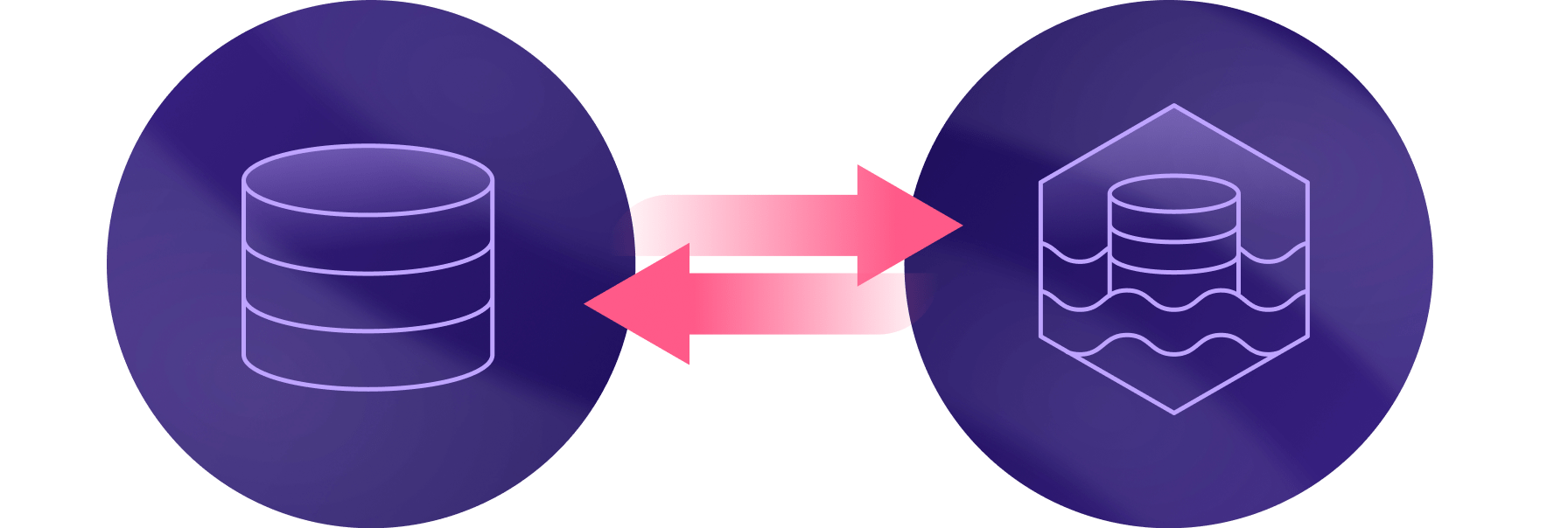
Modern businesses are increasingly relying on vast amounts of data for informed decision-making. From website traffic to user activity logs to financial records to marketing analytics, organizations must store, manage, and analyze data efficiently. As data continues to grow in volume and complexity, businesses need high-performing and reliable storage solutions. Two primary storage solutions stand out: databases and data lakes. Choosing the right one impacts everything from real-time operations to long-term insights.
A database is an organized collection of data or information, typically structured according to a predefined schema. It’s designed for fast access, transactional integrity, reliability, and consistent query performance. Depending on their primary function, databases are broadly classified into two categories: online transaction processing (OLTP) and online analytical processing (OLAP). OLTP databases handle real-time transactions, such as processing orders or banking operations, while OLAP databases support complex queries and trend analysis for reporting and business intelligence.
A data lake is a storage system that stores raw, structured, and unstructured data from various sources. It enables large-scale analytics, machine learning, and historical analysis without enforcing rigid schemas.
So, when should you consider a database versus a data lake? In this article, you’ll learn the key differences between databases and data lakes, based on the following:
- Purpose and functionality
- Cost and scalability
- Query performance
- Data management and governance
- Interoperability and ecosystem
We’ll also discuss the role of the data lakehouse, which has rapidly emerged as a new data architecture that combines the scalability and cost benefits of data lakes with database-like features such as ACID transactions, indexes, and improved query performance. Data lakehouses enable organizations to achieve more interactive, real-time analytics on large-scale data without incurring the high costs traditionally associated with databases.
Purpose and Functionality
Databases store data in an organized format and structure, making them ideal for applications that require speed, reliability, and quick pointed lookups, such as banking, healthcare, e-commerce, and customer service platforms. All databases store information, but their design and functionality differ. Relational databases organize data into tables with predefined rows and columns, with consistency and relationships between records. Non-relational (NoSQL) databases use more flexible storage models, including JSON, BSON, key-value pairs, dynamic column-based tables, and graph structures. Relational databases are necessary for data consistency and structured relationships, such as in enterprise resource planning (ERP) systems and user authentication services, where maintaining accuracy across multiple transactions is essential. NoSQL databases help in scenarios where scalability, speed, and flexibility matter, such as in real-time analytics, content management systems, and personalized recommendation engines.
Data lakes, on the other hand, store unprocessed data without imposing structure or predefined schemas. Unlike databases, which still organize data based on access patterns, data lakes are built for large-scale storage, processing, and exploratory analysis rather than optimized retrieval. Considerations like format, file type, and specific purpose are not restrictive, allowing everything from relational data to JSON documents to IoT device data to video files. There’s no need to transform the data first, so users can just dip into the lake and extract what they need. Data lakes lack native support for ACID transactions, indexing, and constraints, and querying often requires extra processing and specialized tools to extract meaningful insights in a performant way. Instead, they excel at storing large amounts of structured, semi-structured, and unstructured data from multiple sources, enabling batch processing and advanced analytics.
Many businesses use both databases and data lakes to meet different needs. Databases provide structured and reliable access to data with accuracy and speed in transactional systems. They support real-time operations and maintain consistency and integrity. Data lakes serve as expansive storage systems that collect diverse data, helping businesses analyze trends, train machine learning models, and gain deep insights. While databases handle day-to-day operations, data lakes provide the flexibility to explore and extract value from large-scale data.
Some organizations want to reap the advantages of both architectures in a single platform. That’s why the data lakehouse was created. The data lakehouse is created with open table formats like Apache Hudi™, Apache Iceberg™, and Delta Lake™, which add a layer of metadata to tabular file formats like Apache Parquet™. Lakehouses add a transactional layer to the data lake in cloud storage, giving it functionality similar to a data warehouse while maintaining the scalability and cost profile of a data lake. Powerful capabilities are now possible, such as support for mutable data with upserts and deletes using primary keys, ACID transactions, optimizations for fast reads through data clustering and small-file handling, table rollbacks, and more.
Cost and Scalability
Cost and scalability impact the long-term efficiency and return on investment for large businesses. Traditional databases are optimized for structured data, and they offer strong performance since they use indexing, caching, and optimized query execution. However, they also require significant computational resources, including constant storage, memory, and CPU power, which can become expensive. Scaling a database also requires additional computing resources, licensing fees, and infrastructure upgrades, which means higher costs, especially for on-premises setups. Cloud-based databases do provide more flexibility, but costs can still rise significantly with increasing storage and computing demands.
Data lakes, in contrast, are built to handle large-scale data processing at a lower cost. A big advantage here is that data lakes decouple storage from compute, so businesses can scale storage independently as data grows. Data lakes do not require a predefined schema, which reduces the need for extensive upfront data modeling. This schema-on-read approach enables organizations to expand their data collection since data processing can be done later when analysis is required, optimizing costs by only applying compute resources when needed. Data lakes often use cost-effective storage solutions such as Amazon S3, Google Cloud Storage, and Azure Blob Storage, which are significantly cheaper than database storage for large volumes.
Businesses have to consider not only the current cost of data storage but also how expenses can grow over time. A data lake provides cost-effective storage for large amounts of data, as processing can be deferred and scaled as needed. However, because querying in a data lake requires additional compute resources, including more CPU, memory, and I/O, as well as specialized engineering expertise, costs can rise. If you need real-time transactions and frequent queries, databases (despite their higher costs) may be necessary for operational efficiency.
Query Performance
Databases can perform queries at high speeds because they organize data in structured tables with defined relationships between them. Indexes create specialized data structures (such as B-trees or hash tables) that enable the database to locate specific records without examining every row, thus reducing search complexity. Relational databases such as MySQL and PostgreSQL use query optimizers that determine the most efficient execution plan among multiple possibilities. They also implement buffer caching to keep frequently accessed data in memory, minimizing slower disk I/O operations.
As data lakes store data in its raw form without a schema, they can slow down query performance. Data isn’t indexed upfront, so retrieving specific records requires scanning large portions of the dataset, increasing wait times. To improve this, lakehouse projects enhance data retrieval speed by adding schema and metadata management capabilities. Open table formats like Apache Hudi™, Delta Lake, and Apache Iceberg™ all implement these features. However, Hudi goes further with native indexing that's built into the table's write/read path and maintained automatically, further accelerating queries.
These technologies create additional metadata files that track what’s in your data files and where to find specific information. Hudi maintains file lists, column stats, and partition stats for data skipping. It also supports record and secondary indexes to significantly improve the efficiency of equality-matching queries, and expression indexes to provide even broader indexing capabilities. Iceberg maintains manifests of all data files with information about what each contains, enabling queries to read only relevant files. Delta Lake keeps track of the value ranges for each data file so it can skip files that don't match your query conditions. For example, it tracks minimum and maximum values per Parquet file or row group to determine which files to read.
All three use efficient column-based storage to group similar data together and read only necessary columns to speed up queries. They can also enforce table schema, such as defining column names and data types, validating writes and reads, and rejecting mismatches unless an explicit schema change is made. This brings database-like reliability to data lakes without sacrificing the flexibility to store diverse data types.
Fast, structured querying is crucial for transactional systems and real-time analytics. Databases are ideal for applications where even small delays can impact operations or revenue. However, when dealing with large, diverse datasets, a data lake that is enhanced with indexing and schema management offers better scalability while keeping query performance manageable. This helps applications such as streaming services, IoT systems, and cybersecurity analytics efficiently handle large-scale data processing, where rapid but flexible data exploration is more valuable than instant transaction processing.
Data Management and Governance
Data governance involves establishing policies and controls to ensure the quality, security, and compliance of data. Despite its importance, many organizations struggle to implement effective governance frameworks. According to a 2024 Gartner report, 80 percent of data and analytics governance initiatives will fail by 2027 because of a lack of urgency or a triggering event. Databases’ built-in governance features enforce schemas and maintain transactional consistency through ACID compliance. They also include tools such as automated backups and versioning.
In comparison, governance becomes more complex in data lakes. Without data quality controls, metadata management, and access policies, they can turn into data swamps, where poorly labeled or inconsistent data makes retrieval difficult. To prevent this, businesses move towards lakehouse architectures using technologies like those mentioned before (Hudi, Iceberg, and Delta Lake), which add schema evolution and versioning to data lakes to provide data consistency, prevent duplication, and track changes over time. Additionally, for security and compliance requirements such as encryption, access policies, and audit logging, tools such as AWS Lake Formation or Microsoft Purview can help.
Governance and compliance are harder to manage in hybrid ecosystems because databases and data lakes handle them differently. Databases have built-in controls, while data lakes need specialized tools to maintain structure and security. Without a unified approach, businesses risk inconsistencies, security gaps, and compliance issues.
Interoperability and Vendor Independence
Databases are often tied to specific vendors, such as Oracle or Microsoft SQL Server, that use proprietary storage and tooling. This means that switching to another database can be cumbersome and costly once you adopt a particular technology. Vendor lock-in can limit flexibility, particularly for businesses that need to integrate with multiple platforms.
Data lakes are designed to be more open and flexible. They store data in open formats, decoupled from any single compute engine. This openness means the same dataset can be read by multiple query engines such as Apache Spark™ and Presto, rather than being confined to a single vendor. In addition, data lakehouse technologies such as Hudi, can also synchronize metadata with external data catalogs, such as Hive Metastore, DataHub, and AWS Glue Catalog, allowing the same data to be discovered and queried across different tools.
Openness at the storage layer allows data lakes to avoid vendor lock-in while maximizing flexibility. While databases provide strong performance and security, their dependence on specific vendors can limit flexibility. By integrating both, businesses can maintain operational efficiency while staying responsive to newer technologies and analytical needs.
Conclusion
Choosing between a database and a data lake ultimately depends on data structure, performance, cost, and scalability. Databases store structured data with ACID compliance, making them ideal for transactions and real-time analytics. Data lakes store raw, diverse data in open formats, making them better for large-scale processing, historical analysis, and machine learning.
Many organizations now combine both, but managing separate systems often leads to high costs, data duplication, and operational complexity. This challenge led to the rise of the lakehouse architecture, which brings together the reliability of databases with the flexibility and scalability of data lakes. A modern lakehouse supports real-time analytics, batch processing, and AI workloads on a single open foundation.
This is where Onehouse comes in. Onehouse brings all the benefits of a lakehouse together in a fully managed, cloud-native platform that eliminates the heavy lifting of building and maintaining one yourself. With Onehouse, you also get:
- Automated optimization with Table Optimizer: Automatically manage file sizes, compaction, and clustering so your tables stay performant and your queries run faster at a lower cost.
- Free observability with LakeView: Get instant insight into table health with visual dashboards, alerts, and metrics that help you spot and resolve issues before they affect performance.
- Multi-format, multi-catalog interoperability: Use your preferred table format (Hudi, Iceberg, or Delta) and keep everything in sync across catalogs like Glue, Unity, and Snowflake.
- 2–3x faster Spark and SQL performance with Quanton and OCR: Boost pipeline efficiency with an intelligent compute runtime that scales automatically and reduces Spark infrastructure spend by more than 50 percent.
By unifying databases and data lakes into one open foundation, Onehouse gives you a single, cost-effective platform for both real-time analytics and large-scale data processing.
See how Onehouse unifies databases and data lakes into one open, automated data platform. Try it free and experience faster pipelines at half the cost.


Read More:



Announcing Apache Spark™ and SQL on the Onehouse Compute Runtime with Quanton


Announcing Open Engines™: Flipping defaults to “open” for both data and compute
Subscribe to the Blog
Be the first to read new posts